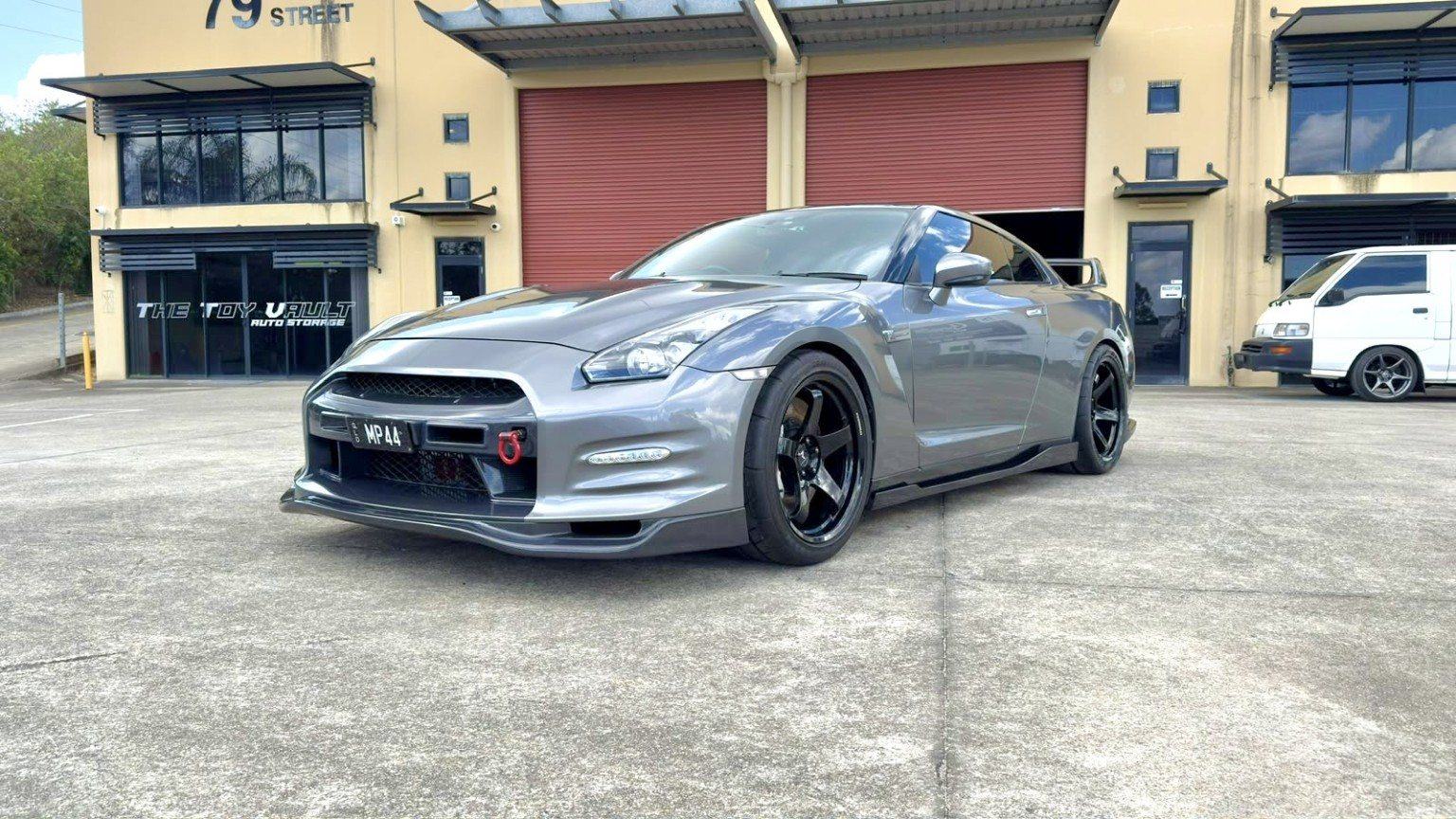
The R35 is the car that makes sense of why I’m interested in watches as well as cars. I like machines with a clear engineering point of view, and the GT-R has one. It isn’t just the shape or the reputation. It is the idea of an engine, gearbox, driven wheels and chassis designed to work together, with very little embarrassment about how technical the result is. My silver car makes that attitude visible before it moves.
At thirty, I can appreciate the childhood-poster appeal and still care about the ordinary ownership questions. How much space does it occupy? What does a particular setup do to its everyday usability? How do its major components work together? I don’t want this review to become an unverified power claim. The year, tune and suspension details of my example still need documenting, so the factory figures below describe the original R35 baseline. The personal part is why the design and engineering continue to interest me, rather than a made-up dyno result or track time.
The platform behind the shape
Nissan’s 2007 heritage record describes the original R35 with a 3,799cc twin-turbo V6 and a rear-mounted dual-clutch transaxle within an all-wheel-drive layout. The Japanese launch specification was 480PS and 588Nm. These are historical baseline figures, not a claim about this silver example. They show the essential engineering decision: the GT-R was designed as an integrated performance system, with its engine, transmission placement and driven wheels considered together. It was never simply an ordinary coupe given more boost and a larger set of tyres.
The rear transaxle is the detail I keep coming back to. It shows how much of the car's identity comes from packaging rather than a power figure. For me, that makes the R35 more interesting than a coupe that happens to accelerate hard. The engine is important, but the architecture around it is the story.
Presence: mass made legible
The silver finish helps describe that organisation. It makes the crease above the front wheel, the rise of the bonnet and the broad rear shoulder easy to read. Dark wheels visually lower the car without requiring the body to be painted black. The front opening gives the nose a strong horizontal element, while the headlights pull the eye back along the wings. The shape is muscular, but its strength comes from proportion rather than a collection of disconnected vents. The body looks continuous from nose to cabin to rear haunches.
The dark lower edge and red towing eye add the personal details I like against the silver body. The stance looks deliberate, but a parked photograph doesn't establish suspension travel or alignment. I care about those distinctions because the most convincing-looking setup still needs to make sense as a complete car.
The rear view completes it
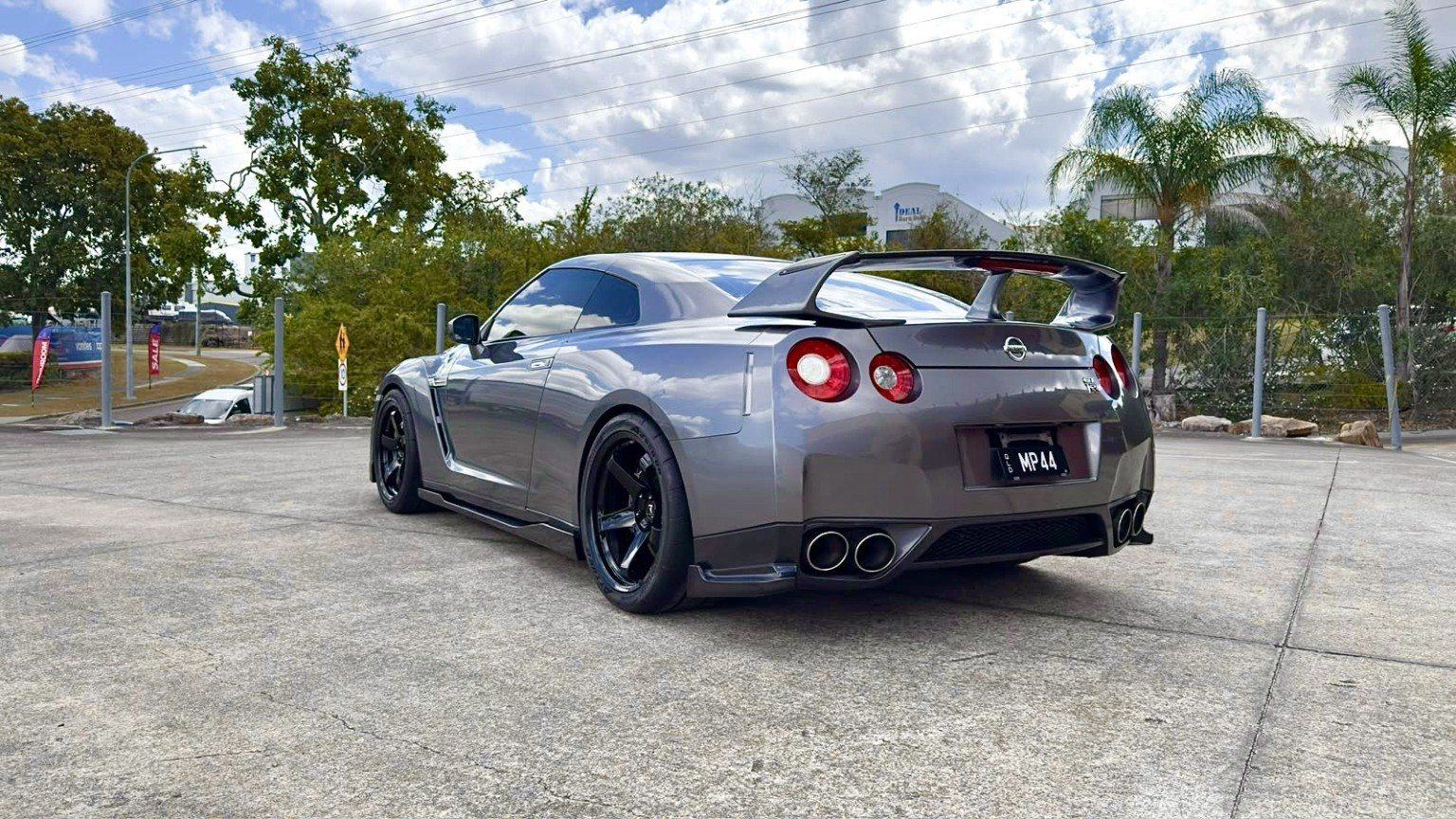
The second photograph shows why the R35 remains unmistakable from behind. Four round rear lamps sit within a broad tail, the wing rises above the boot line, and the exhaust outlets anchor the lower corners. The rear glass and roof taper into a comparatively substantial body. That tension between a small-looking cabin and large-looking shoulders is a recurring part of the car’s identity. The rear view does not feel like an afterthought to an aggressive nose. It is a second complete statement, with enough simple geometry to remain recognisable without the badges.
Why the driving reputation interests me
The most useful point I take from evo’s R35 assessment is that the GT-R’s systems don’t make the driver irrelevant. Its reporting describes an involving car whose mass, braking and chassis still demand attention. I like that more nuanced picture. The engineering appeal is not a fantasy of switching off the driver; it is how a complex car helps put considerable performance onto the road.
The model’s development also matters. Steering, damping and calibration changed across versions, and a modified car adds another layer. I wouldn’t combine every positive impression from every R35 review and pretend one example delivers all of them simultaneously. My takeaway is that the GT-R has a strong underlying character, but setup determines how that character reaches the driver. That is the question I want to keep at the centre of this car: does the particular combination feel coherent?
The everyday side I care about
The driving position is where my interest starts, well before an acceleration number. I want seat support, a sensible reach to the wheel and a pedal layout that lets me feel properly located in the car. The R35’s broad body makes placement important too. A car can look magnificent in a wide car park and ask much more of its driver on a narrow suburban street. That difference belongs in an honest discussion of daily appeal.
For Australian use, I’m interested in ordinary surfaces, ramps and low-speed behaviour as much as outright pace. A low front edge changes how I would approach a steep driveway. Tyres and suspension determine whether a rough patch feels controlled or simply busy. The transmission’s behaviour leaving a junction matters alongside its performance under load. These are my priorities for evaluating the car, rather than claims that every R35 generation or modification delivers the same response. That everyday context gives the engineering a purpose beyond a specification sheet.
Why I care about the whole setup
A car like this deserves a better conversation than asking what power it makes. I want records that connect the hardware to the calibration, tyres suited to the use and maintenance that keeps pace with the car’s demands. Brake condition, fluids and the quality of previous work are part of the appeal of ownership because they determine whether the machine remains the one its design promises.
I also like the idea of modifications with a clear purpose. A wheel, suspension change or body detail should contribute to the whole car rather than exist only as a separate item on a list. The photograph can show the stance, but it can’t tell me the alignment or available suspension travel. That distinction doesn’t make me less interested in the car. It makes me more interested in understanding it properly, including the quieter decisions that don’t show up in a front three-quarter shot.
Where it fits in my collection
The version of GT-R ownership I find most interesting is not a constant sequence of launches. It is making room for a fairly serious machine in an ordinary life. A commute, a coffee stop and a carefully chosen drive are useful ways to think about whether the car’s character remains enjoyable when there is no headline performance number involved.
For me, the static details already carry some of that appeal. The silver shows the creases rather than hiding them, the dark wheels keep the body visually grounded, and the round rear lamps give it an identity that doesn’t depend on a badge. I would rather spend time understanding how the particular car is put together than assign it somebody else’s road-test sensations. The reputation starts the conversation; the actual specification and condition should finish it.
Verdict
The silver body, dark wheels and unmistakable rear make this R35 feel like a complete visual statement to me. I like the way the engineering story backs that up: a specialised drivetrain architecture and a car developed around putting its capability to use. The trade-offs are size, complexity and the importance of setup. I wouldn’t want to hide those behind the badge. They are part of what makes the GT-R interesting. For this journal, it is the right cover car because it expresses the same thing I enjoy in watches: an object with a clear purpose and a personality that follows from it.